
Meta Title: How to Create AI- Friendly Content ChatGPT, Gemini & Perplexity Reference.
Meta Description: Learn how to create AI- Friendly content that ChatGPT, Gemini, Perplexity and Google AI Overviews can reference.
| Keywords | Primary Keyword: AI-friendly contentSecondary KeywordsAI SEOAI search optimisationGoogle AI Overviews AI visibilityAI content optimisationSemantic SEOLSI KeywordsContent marketing strategysearch intentinternal linkingAI-generated answersE-E-A-T |
| Target Audience | Business OwnersStartup FoundersMarketing ManagersContent MarketersSEO ProfessionalsDigital Marketing Agencies |
| Search Intent | Informational + Commercial |
| Website | https://briefscontent.in/ |
Table of Contents
How to Create AI- Friendly Content That ChatGPT, Gemini & Perplexity Can Reference 2
Why Getting Referenced by ChatGPT, Gemini & Perplexity Matters 3
How ChatGPT, Gemini & Perplexity Choose Content to Reference 4
AI search tools are not like Google in terms of their operations. 4
What makes content citation-worthy? 5
How Google AI Overviews Select Information 5
How to Create Content That ChatGPT, Gemini & Perplexity Can Reference 5
Producing Content That Is Comprehensive and Complete 5
Establish Credibility by Addressing a Single Topic Thoroughly 6
Emphasise Queries Rather than Focused Keywords 6
Common Knowledge and Trustworthiness Should be Evident (EEAT) 6
Frame the Content in a Proper Structure for AI Readability 6
Include Your Own Research and Information 6
Use Semantic SEO and Entity Optimisation 7
Refresh Your Content Regularly 7
How Major AI Search Tools Evaluate Content 7
How Briefs Content Helps Businesses Optimise for AI Search 8
How to Create AI- Friendly Content That ChatGPT, Gemini & Perplexity Can Reference

Nowadays, whenever one searches on Google, one may not get a list of different web links. Instead, one may be provided with a concise response or summary created by AI, followed by some links to sources at the bottom.
Google AI Overviews are now in use by over 2 billion people each month across more than 200 nations. According to a Business Insider report, ChatGPT has reached around 800 million users weekly, indicating that its user base has doubled in less than one year.
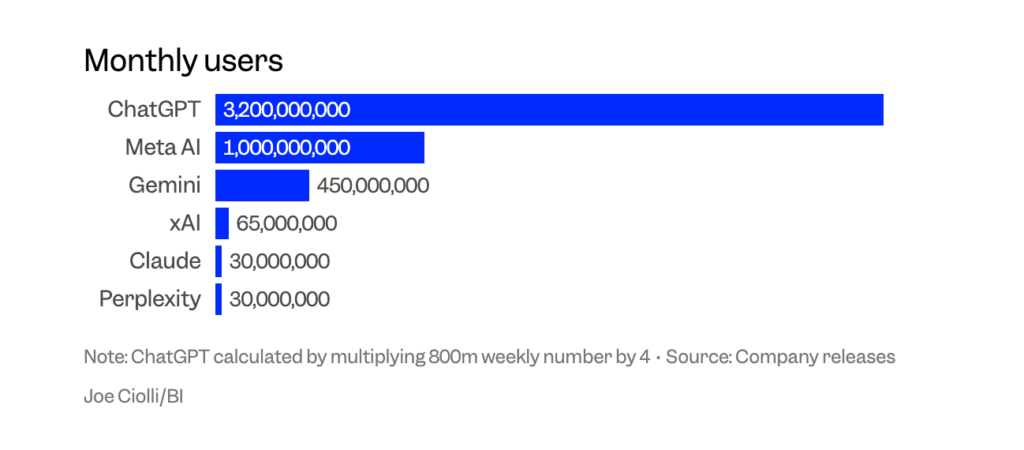
Even if your site ranks first on Google, it may not be visited by many users because AI can provide the answer in a straightforward way. AI requires trustworthy websites to generate the answers. Through this blog, let’s understand how you can create AI-friendly content and improve AI visibility.
Why Getting Referenced by ChatGPT, Gemini & Perplexity Matters
AI tools are being used by an increasing number of individuals for online searches. Rather than putting in a couple of keywords in a search engine, they will instead phrase their queries as proper questions.
According to Bain & Company, 37% of individuals initiate their inquiries using an AI tool instead of a conventional search engine.
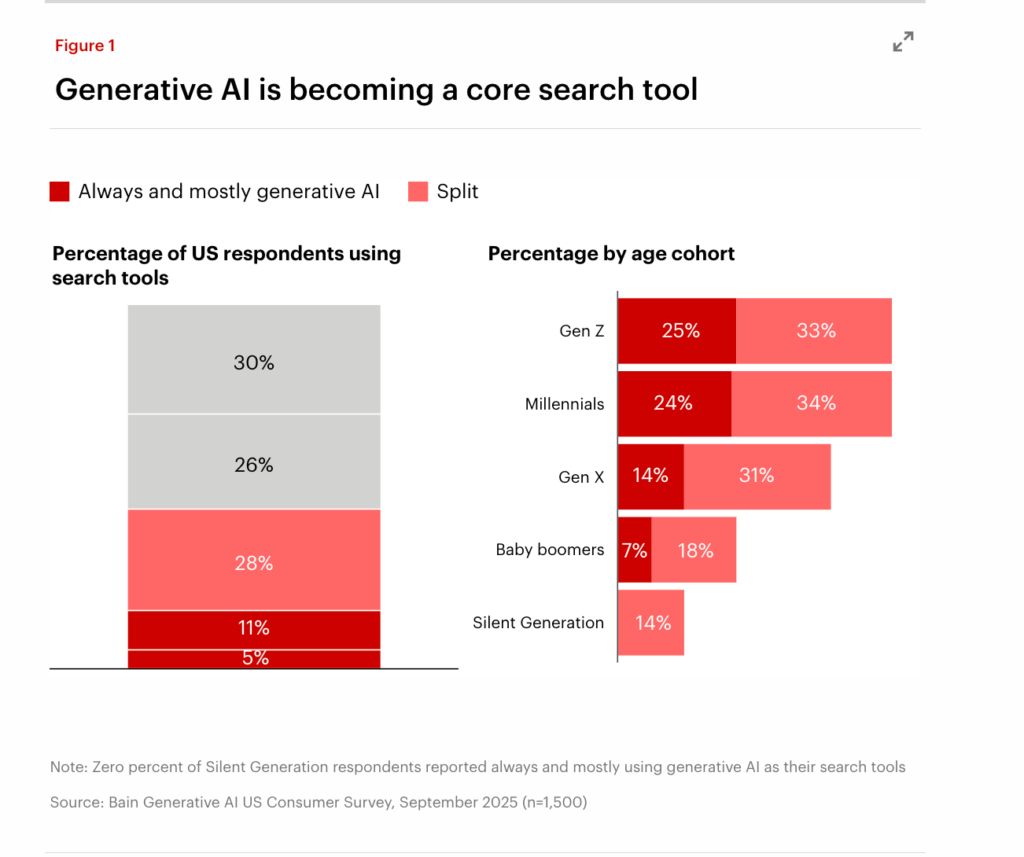
Each time an AI is asked a question, it is an opportunity for your brand to be mentioned in terms of the information provided or to miss the call altogether. This is why AI search optimisation is growing. You will hear terms such as Answer Engine Optimisation (AEO) or Generative Engine Optimisation (GEO) being frequently used. These methods do not replace conventional SEO but complement it to help your content get noticed within AI-oriented search results.
How ChatGPT, Gemini & Perplexity Choose Content to Reference
AI search tools are not like Google in terms of their operations.
Google provides a series of results in the form of web page links. AI search tools have different ways of working.
Search systems locate web page links and documents in real time. Web searches bring up the latest information before answering, unlike methods used in AI tools like ChatGPT that employ browsing techniques.
Unlike Google, which provides you with a long list of links, an AI tool reads several relevant sources and combines the information in one clear answer, listing the sources that were found to be the most useful as AI-generated answers.
What makes content citation-worthy?
There are various factors that make content worth quoting or referencing. AI search tools are more likely to value content characterised by authority, trust, fresh ideas, complete answers, clear structure, and topic relevance.
How Google AI Overviews Select Information
According to Google, the basic ranking mechanism used for Google AI Overviews is the same as that for standard Google Search. AI Overviews also assesses whether the content is useful and fits into the E-E-A-T criteria. AI Overviews will not rely on one website but will use data from several trustworthy sources, all of which provide similar answers and rank well.
How to Create Content That ChatGPT, Gemini & Perplexity Can Reference
Producing Content That Is Comprehensive and Complete
AI principles always favour comprehensive AI-friendly content, where each topic is fully covered. Rather than preparing a short article limited to the basics, one should research and produce a comprehensive article that tackles the issue.
One way to do so is to apply the Skyscraper approach. First, find the top article on the given theme, then provide even better content with more useful information, the latest figures, and your own stories and examples.
A shorter article of 600 words does not have any chances against a longer and better guide of 2,000 words that explains a theme in much better detail.
Establish Credibility by Addressing a Single Topic Thoroughly
The AI doesn’t merely scan pages. It examines how authoritative your website is on a particular topic. To accomplish this task, it is advisable to create one core content piece called a pillar page and write a few related articles internal linking to this page. Doing this will demonstrate your expertise in the field.
Emphasise Queries Rather than Focused Keywords
Nowadays people are searching for information in the form of full questions instead of typing keywords to fulfil their purposes. To locate the right questions being asked by your targeted audience, look for them in Google’s People Also Ask section. Use those questions as headings and provide the answer in the first or second sentence underneath it, matching users’ search intent.
Common Knowledge and Trustworthiness Should be Evident (EEAT)
Credible content is favoured by search engines and AI. So make sure your content has an author biography with details of credentials and experience. Try to write real examples and case studies. Include research findings and data.
Frame the Content in a Proper Structure for AI Readability
AI adapts well-structured information rather than lengthy, unreadable passages.
- Using clear headings and simple words.
- Write short paragraphs, using bullets and numbered lists, and tables to compare the information
- Write summaries and small paragraphs at the beginning or the end
- Write FAQs to address the usual queries.
Include Your Own Research and Information
You can find many useful recommendations on the Internet. One way to increase the usefulness of your content is to share your own reports, surveys, and some unique techniques. AI will not find such materials anywhere else, which means it is more likely to use your content in AI-generated answers.
Use Semantic SEO and Entity Optimisation
Rather than using the same keyword repeatedly, introduce new keywords, synonyms, and related terms in your content. This helps AI search bots better understand your page’s content, increasing the likelihood of your page appearing in AI search results.
Refresh Your Content Regularly
AI search engines take the latest reliable content into account. Therefore, it is a good idea to check your content regularly, especially if the issue is changing quickly. Replace obsolete data with updated statistics and significant information.
Improve Technical SEO
No matter how well your content is put together, it is still of no use if your search algorithm cannot read or analyse your site. Thus, your site needs structured data, crawling and indexing ability, low loading times, and mobile responsiveness.
How Major AI Search Tools Evaluate Content
| Platform | What is the Method | How to Check the Information | How to Use Information From Many Sources |
| Google AI Overviews | Google’s search results and site quality, and uses E-E-A-T. | High | Usage in the majority of cases |
| ChatGPT | Makes use of web search results together with its previous knowledge. | Medium–High | Sometimes |
| Perplexity | Searches the web in real time. | High | Yes, usually 3–5 sources. |
| Gemini (AI Mode) | Uses Google searches and live information. | High | Yes, typically |
How Briefs Content Helps Businesses Optimise for AI Search
Using the same keywords repeatedly for AI search is a thing of the past. Today, AI SEO search favours helpful, credible, well-structured content that answers the questions asked by users.
Today, you can find content on different AI platforms such as ChatGPT, Gemini, Perplexity, and Google AI Overview. High-ranking content is quality content with its own information or research.
To get more of your content to show up in AI search results, Briefs Content Services offers SEO content writing, content planning, and content marketing strategy. All our content is optimised for search engines and is easy to find online using AI.
Frequently Asked Questions
- Does Gemini apply SEO rankings?
Yes. As Gemini is linked to Google’s search engine, good SEO practices still make sure that your website shows up in the results.
- How does Perplexity select the websites?
Perplexity searches the internet in real-time. It usually selects websites that give precise, to-the-point answers to users’ questions.
- Is SEO still relevant?
Yes, good search engine optimisation is still important, as AI tools look for websites that are reliable, relevant, and technically well-developed.
- How regularly should I update AI-compatible content?
If your topic is changing frequently, you will need to revise it once every three months. If, on the contrary, the topic is an evergreen one that does not change very often, then revision can be performed every 6 to 12 months.